

Best Patio Roofing Material For Your Home

A patio roof can make or break the way you use your outdoor area. Get the material right and the space feels cooler, brighter and more inviting for years. Get it wrong and you can end up with too much glare, trapped heat, constant cleaning or a finish that never quite suits the house. That is why so many homeowners ask the same question: what is the best patio roofing material?
The honest answer is that there is no single winner for every home. The best choice depends on how you want the space to feel, how much weather protection you need, how much natural light you want to keep, and how closely the new structure should match the rest of your property. In Victoria, where conditions can shift from hot sun to wind and rain, that balance matters.
How to choose the best patio roofing material

Before comparing products, it helps to think about the job your patio roof needs to do. Some families want full shade over an alfresco dining area. Others want filtered light over a deck so the space still feels open. Some want a roof that looks like a natural extension of the home, while others care most about low maintenance and long-term durability.
A good roofing material should suit all four of these factors: climate performance, appearance, structural strength and day-to-day practicality. It also needs to work with the design of the patio itself. A freestanding pergola, an insulated attached patio and a modern louvre system all place different demands on the roof covering.
This is where tailored design matters. The best result is rarely about choosing a material in isolation. It is about matching the material to the span, pitch, orientation and style of the structure.
The most common patio roofing materials
Insulated roofing panels

For many homeowners, insulated panels are the strongest all-round option. They provide a solid roof with built-in insulation, which helps reduce heat transfer and makes the patio more comfortable through summer. They also offer a clean, finished look underneath, so the ceiling appears neat and substantial rather than exposed.
This material is especially well suited to patios that are used as true outdoor rooms. If you want to entertain, dine, or create a more sheltered living zone, insulated panels give you a more controlled environment. They can also help reduce noise from rain compared with thinner sheet products.
The trade-off is that insulated roofing blocks direct light. If your patio sits against rear windows or doors, a fully insulated roof can darken the adjoining indoor space unless the design includes skylight sections or careful planning. It is an excellent choice for comfort, but it needs to be balanced with light.
Colorbond roofing

Colorbond remains one of the most trusted choices for Australian outdoor structures, and for good reason. It is durable, visually tidy and available in colours that work well with a wide range of homes. For homeowners who want a patio that feels integrated rather than added on, Colorbond is often a natural fit.
A Colorbond roof performs well in tough weather and is relatively low maintenance. It creates dependable cover from sun and rain, making it a practical option for patios, verandahs and carports alike. It also suits both contemporary and traditional home styles, depending on the profile and frame design.
The main consideration is heat. Standard metal roofing can become warm under strong sun, which is why insulated versions or thoughtful ventilation can make a big difference. If you like the look and strength of steel roofing but want better thermal comfort, combining Colorbond with an insulated system is often the smarter approach.
Polycarbonate roofing

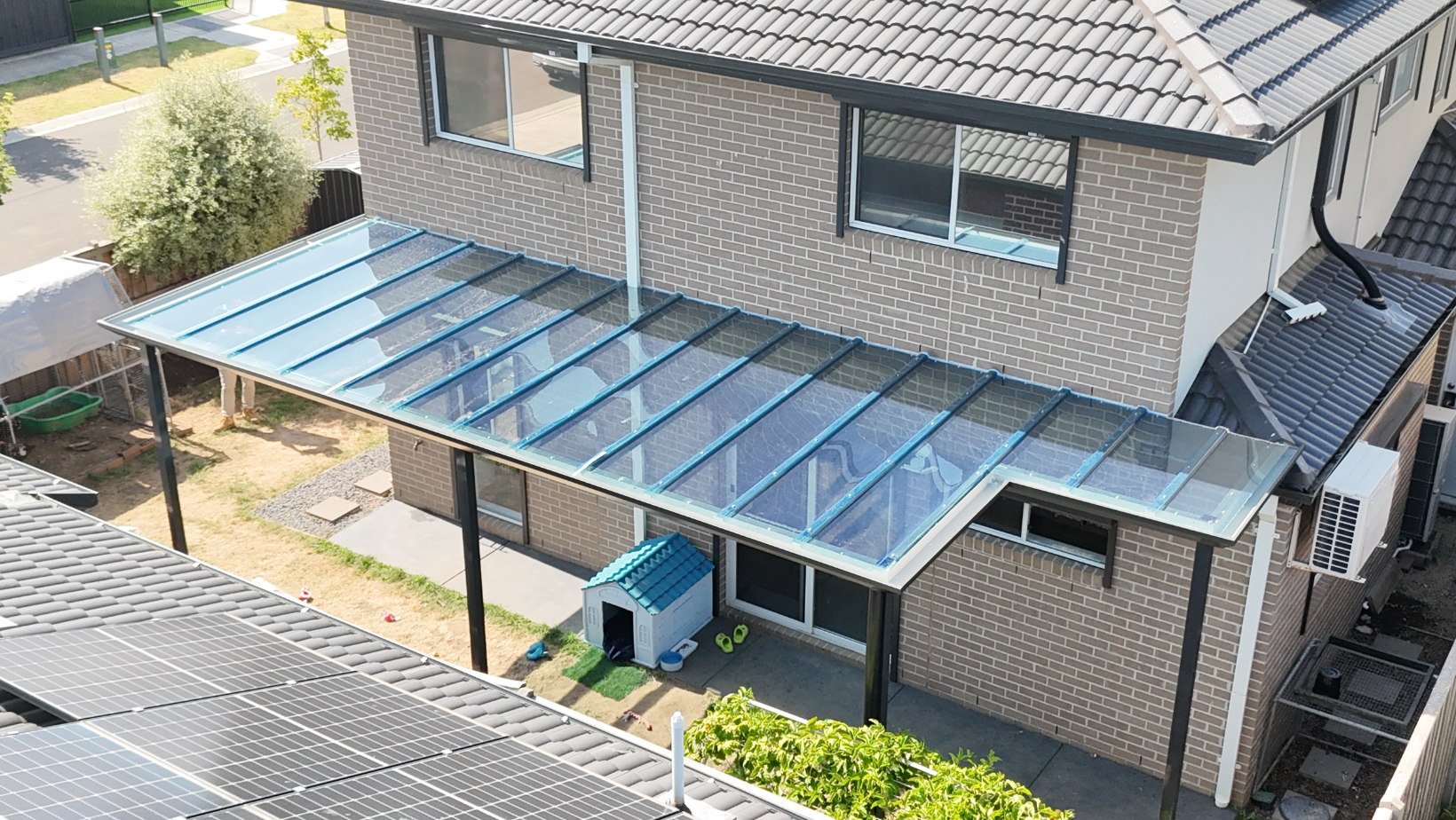
If keeping natural light is the priority, polycarbonate is one of the most popular options. It allows daylight to filter through while still providing cover from rain and UV exposure, depending on the sheet type chosen. For smaller patios or areas near living rooms, this can help preserve brightness both outside and inside.
Polycarbonate can work well over pergolas, side paths and casual sitting areas where a lighter visual feel is preferred. Tinted or diffused finishes can reduce glare and soften the light, which is often more comfortable than clear sheets in full sun.
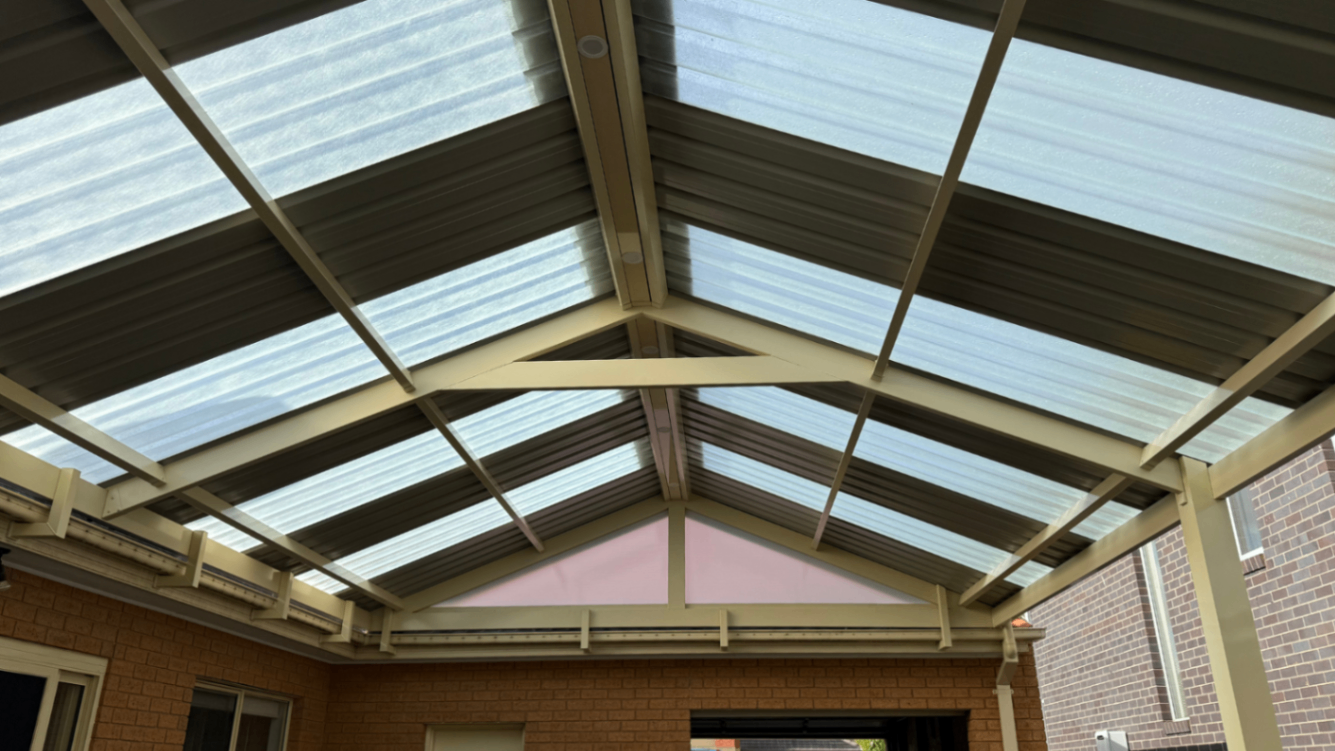
That said, polycarbonate is not always the best patio roofing material for large entertaining zones that need strong heat control. It can still allow a fair amount of warmth through, especially on west-facing areas. It is best used where light is more important than full insulation, or where it is combined with solid roofing sections for a more balanced result.
Louvre roof systems

Louvre roofs offer flexibility that fixed roofing materials cannot. With adjustable blades, you can open the roof for sunlight and airflow or close it for shade and rain protection. For homeowners who want control rather than compromise, this is a very appealing solution.
The biggest advantage of a louvre system is adaptability. Morning sun, afternoon heat and changing weather can all be managed throughout the day. It also creates a premium, architectural look that suits modern outdoor spaces.
The trade-off is that this is a more specialised system than standard sheet roofing. It is less about simple coverage and more about lifestyle performance and design intent. If you want a patio that feels high-end and highly usable in different conditions, louvres are worth serious consideration.
Which patio roofing material is best for Australian conditions?

In Australian conditions, especially across suburban Victoria, heat management and weather durability usually matter more than anything else. That is why solid roofing systems such as insulated panels and quality steel roofing are often preferred for main patio areas. They provide dependable shelter and suit the way most families want to use the space - for outdoor dining, weekend gatherings and everyday shade.
Polycarbonate still has a place, particularly when used strategically. It can brighten darker zones and stop a patio from feeling too enclosed. But in harsh afternoon sun, too much transparent or translucent roofing can make the space less comfortable than expected.
If you are weighing up the best patio roofing material purely on performance, insulated roofing usually comes out in front for comfort and year-round use. If appearance, strength and a classic Australian finish are top priorities, Colorbond is hard to beat. If flexibility matters most, louvres offer a different kind of value.
Matching the roof to the way you live

A family patio used for barbecues, school holiday lunches and weekend entertaining needs a different roof from a quiet garden pergola. This is where many homeowners make the wrong call. They choose based on appearance alone, then realise later that the area is too hot, too dark or not protected enough.
Think about when you use the space most. A west-facing patio that gets hammered by afternoon sun usually benefits from stronger insulation and deeper shade. A compact courtyard that already feels enclosed may benefit from lighter materials or mixed roofing sections to keep it open. A patio connected directly to the house often needs careful planning so indoor rooms do not lose too much natural light.
This is also why custom design delivers better outcomes than one-size-fits-all kits. The same material can perform beautifully in one layout and poorly in another.
Best patio roofing material for style and resale appeal

Good patio roofing should not look like an afterthought. The most successful projects feel consistent with the home, both in colour and proportion. Steel roofing such as Colorbond is particularly strong here because it pairs easily with many Australian homes and creates a clean, finished look.
Insulated panels also offer strong visual appeal, especially when homeowners want a more substantial outdoor living area with a polished underside. Louvre roofs suit modern homes and can elevate the overall presentation of the backyard.
From a property point of view, buyers tend to respond well to outdoor spaces that feel functional and permanent. A patio that offers genuine comfort and weather protection is easier to picture using. In that sense, the best patio roofing material is often the one that helps the space feel like a true extension of the home.
Making the right decision without overcomplicating it

If you want a simple rule of thumb, start with comfort first, then look at light, then style. Homeowners rarely regret choosing a patio roof that makes the area more usable across more months of the year. They do regret roofs that looked fine on paper but left the space too exposed or too hot.
It is also worth comparing options as systems, not just materials. The roof sheet matters, but so do the frame, insulation, ventilation and how the whole structure is positioned. A well-designed patio does more than keep the rain off. It changes how your home lives.
For homeowners planning a long-term outdoor upgrade, the best choice is usually the one tailored to your house, your orientation and your everyday routine. That is where an experienced custom builder can make the decision much clearer.
The right patio roof should feel like it belongs there from day one and keep proving its value every summer, every shower and every relaxed afternoon spent outside.
Frequently Asked Questions
What services does Sam Outdoor Living provide?
We specialize in designing and building custom outdoor structures, including patios, pergolas, carports, decking, sunrooms, louvres and insulated roofing systems. We use high-quality materials from trusted brands like Stratco, Palram, Lysaght, Ekodeck.
Do you offer warranties on your structures?
Yes, all our structures come with a 5-year workmanship warranty, an 8-year paint finish warranty, and a 12-year structural warranty. *Terms and Conditions applied.
Do I need council approval for my outdoor structure?
Some projects may require council approval. Our team can assist with the application process to ensure all necessary permits are obtained.
How do I get a quote for my project?
You can request a free, no-obligation quote by filling out the form on our website or contacting us directly at +61 421 515 768. We’ll schedule an on-site consultation to discuss your ideas and provide a free estimate.
What areas do you service?
We serve customers from all suburbs across Victoria. If you’re unsure whether we service your area, feel free to contact us at +61 421 515 768.
Recent Blogs

Have a Project in Mind?
Ready to transform your outdoor space? We’ll provide a personalized, no-obligation quote tailored to your needs. Simply fill out the form below, and we’ll be in touch soon!

Get Free Quote
Award winning products


We are dedicated to crafting beautiful, functional outdoor spaces that blend seamlessly with your home